Heat Decarbonisation
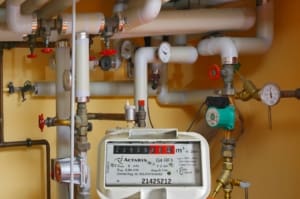
It is expected that heat decarbonisation will be delivered largely through (renewably powered) electrification, relying primarily on heat pumps with limited contribution from decarbonised gas alternatives. This will require the installation of low-carbon heating technologies in buildings, as well as transformative action to decarbonise selected parts of the gas grid, continued decarbonisation of the national electricity grid and significant upgrading of electricity grid capacity and infrastructure.
Renewable Energy Generation
Regulation of the gas and electricity grids is reserved to the UK Government and the Office of Gas and Electricity Markets (Ofgem), and the Scottish government continues to work closely with these parties and Scottish Distribution Network Operators. In March 2021, an agreed a set of principles was agreed upon, which sets out how Scottish energy policy should be taken into account in decisions about investment in network infrastructure.
Advice for public bodies procuring electricity can be found here.
Renewable Heating Sources and Zero Direct Emission Technologies
There are a variety of low-emission heating technologies that will be required in order for Scotland to meet its decarbonisation target. The most effective combinations of these to work at scale is not yet clear and will depend on local geographies and building types. Zero direct emission technologies (ZDET) include heat pumps, heat networks, solar photovoltaic and solar thermal storage systems, electric storage heaters, electric boilers, and direct electric heaters. As identified in the Heat in Buildings Strategy, heat pumps and heat networks are the two most low-regret options for existing commercial buildings.
-
Heat Pumps
Heat pumps are the key decarbonising technology for buildings. A heat pump is a device that does not rely on fuel combustion and instead uses electricity to provide heat, making it an attractive low-carbon alternative to gas and oil boilers. It works similarly to a fridge – except in reverse. There are three main types, which differ in where they source heat from: ground-source, air-source and water-source heat pumps.
Heat pump technologies are mature, readily available on the market, and have already been demonstrated at scale in Europe. Heat pumps are more efficient than other heating systems; exact energy demands will depend on the heat source and the output temperature, which varies throughout the year. Despite one kWh of electricity in general being more expensive than one kWh of gas (by a factor of 4-5), the far higher efficiency of heat pumps means the amount of energy needed can be less than a third of that needed by a gas boiler to produce an equivalent amount of heat.
-
Direct Electric Heating
Direct electric heating systems (such as electric panel heaters) use electric energy without any supporting mechanisms, such as heat pumps. They are attractive due to their simplicity and typically lower capital cost compared to a wet system. There is a role for them in buildings with very low heat demand. However, the building will be significantly more expensive to run compared to either a gas boiler or heat pump. Direct electric also results in higher peak loads and so is not desirable at scale. The use of storage heaters can help to mitigate both factors but in general direct electric should only be considered where heat pumps are not feasible and where the heat demand is low.
-
Secondary Technologies
Secondary technologies work well in conjunction with primary zero emissions heating systems such as heat pumps to increase operational effectiveness and maximise emission reduction benefits. Examples include solar thermal, micro wind and solar PV electricity generation as well as a variety of storage technologies such as electric batteries, thermal water stores and thermal heat batteries. Solar PV is an addition to, not a substitute for, low-carbon heat; the carbon savings associated with this generation will decline as the national grid decarbonises. Self-generated electricity can however help reduce the running costs associated with a heat pump, by reducing grid consumption.
Heat Networks
Heat networks will also have a crucial role to play in providing clean heat across Scotland. Heat networks are a form of infrastructure consisting of insulated pipes and heat generation, which supplies thermal energy to multiple buildings from centralised power sources, rather than each property having its own heating system. There are two types of heat networks, which differ by size:
- Community – typically supplying heat to one to two buildings.
- District – supplying heat to multiple buildings or whole communities.
Heat networks are agnostic of fuel sources but allow more easily for the integration of renewable energy sources via heat pumps or the utilisation of surplus heat that would be otherwise wasted, and therefore can significantly cut emissions unachievable on a building-by-building basis. A critical advantage of district heating is that connecting multiple buildings creates economies of scale that enables the deployment of more efficient, resilient local energy resources. Excess heat is a large untapped source of energy. Many public buildings are located close to other sources of heat, such as data centres, supermarkets or underground stations. The (England and Wales) Public Building Energy Efficiency Report urges all public buildings with a large hot water demand to review waste water heat recovery technology, and see if it is retrofittable. Although there are currently only a small number of heat networks in Scotland, supplying only 1.5% heat, they are tried and tested technology used extensively across Europe.
-
Bioenergy
Bioenergy is heat or electricity produced by burning biomass. While the CO₂ released is broadly equivalent to that absorbed during growth (making it close to carbon neutral), combustion also emits small amounts of methane and nitrous oxide that are not reabsorbed and are reported separately in carbon accounting. Emissions vary by biomass type, and bioenergy is not a zero-emission technology. Its sustainability depends on ongoing biomass regrowth.
Decarbonising heat may include blending natural gas with low-carbon alternatives such as sustainably sourced biomethane or hydrogen, subject to safety and commercial viability. The UK Government’s Green Gas Support Scheme (launched in 2021) supports biomethane injection into the gas grid.
The Scottish Government identifies a limited role for bioenergy in heat decarbonisation, primarily for hard-to-treat off-gas-grid homes and small-scale local CHP or district heating schemes.
-
Hydrogen
Hydrogen produces no CO₂ when burned, making it an attractive alternative to fossil fuels. However, most global hydrogen is produced through Steam Methane Reforming (“grey” hydrogen), which emits significant GHGs. “Blue” hydrogen uses the same process with carbon capture and storage (CCS), while “green” hydrogen is produced via renewable-powered electrolysis and has no direct emissions. Currently, only 0.04% of global hydrogen is produced this way.
Hydrogen may support large-scale, long-term energy storage, but its use for heating is generally economically and technically challenging. Heating with hydrogen boilers requires around six times more electricity than heat pumps due to production and conversion losses. The UK Government is still determining hydrogen’s future role, including potential blending into the gas grid (up to 20%, subject to safety and cost review).
The Scottish Government does not see hydrogen playing a central role in decarbonising domestic heat. Given the scale and urgency of the heat transition, and current inefficiencies and costs, direct hydrogen heating is unlikely to be suitable for short- to medium-term retrofit projects.
Case study: SGN is partnering with other UK gas operators on a world-first demonstration of a 100% hydrogen energy system. The H100 Fife Neighbourhood Trial started construction in 2022 and will operate a hydrogen network in Fife able to service around 300 houses