Buildings: Energy Efficiency Improvements
Energy Performance Certificates
Energy Performance Certificates (EPCs) provide information on how energy efficient a building is, relating to its running costs. Buildings are rated on a scale from A-G, with A being the most efficient. The Energy Performance of Buildings (Scotland) Regulations 2008 established two types of EPC: for domestic and non-domestic buildings. The format and method of calculation for each is different, as explained on p.16-17 of the Energy Efficient Scotland Route Map. EPCs underpin the government’s actions to inform and drive improvements to properties.
Scotland’s Non-Domestic Energy Efficiency Baseline Report (2018) outlines the energy efficiency of Scotland’s non-domestic buildings. Analysis showed that three-quarters of all non-domestic premises had extremely poor energy efficiency (EPC E grade or worse). A review of Energy Performance Certificates for domestic and non-domestic properties (Feb 2019) concluded that reform was necessary to better align to net-zero and to underpin a future robust regulatory framework that could be used as a standard to measure properties.
Retrofitting Energy Efficiency Improvements
Non-domestic buildings are highly diverse in nature and use, which can make upgrading them difficult. As a result, policy has tended to focus on new buildings, and easier-to-install interventions on existing buildings, such as like-for-like more efficient boiler replacements (CREDS). Compared to new builds, the retrofitting of properties is often more challenging as a building’s geometry, structural approach and orientation have already been decided. The NZET report (Jan 2023) into the role of local government in financing and delivering a net-zero Scotland noted there are practical issues hindering retrofitting, these included its intrusiveness and cost. In some cases, suitable alternative buildings must be used while work is being undertaken, which, for buildings such as prisons, schools and hospitals, can be difficult to source. Additionally, retrofitting is an area where there is a major skills bottleneck.
The UK has an older property stock with lower energy efficiency than most European countries. The retrofitting of buildings is crucially important as 80% of the buildings expected to be in operation in 2050 already exist. 65% of the existing UK non-domestic stock was built before 1991 and 24% before 1940, and in general, this is not well insulated (BEIS, 2016). The ‘fabric first’ approach prioritises heat retention and reduced air leakage, which is then followed by the installation of efficient heating and ventilation systems. Energy efficiency improvements have significant potential for cost-effective energy savings by reducing operational energy demand through insulation, draft-proofing and upgrading inefficient energy technology. These measures have additional economic, social and health benefits, such as improved air quality. Ensuring that whole building retrofits are carried out on existing buildings remains a major challenge. Current retrofit rates are inadequate for achieving even a significant portion of the required level to meet national targets.
Energy Use Benchmarks and Retrofitting Standards
The Scottish Public Sector Energy Benchmarking Tool supports public sector building managers to improve energy efficiency by providing a comprehensive set of Scotland-specific energy benchmarks for all types of public sector buildings, derived from historic energy use data. This data allows public bodies to make evidence-based decisions on heat decarbonisation and energy use, through more targeted interventions. It covers the main topics of heating, electricity, carbon and water.
There are a variety of recognised building retrofit standards which provide clear assessment methods and standards for design and workmanship, examples listed below:
- The British Standards Institution (BSI) has published a retrofit standard for energy efficiency known as the Publicly Available Specification (PAS) 2038 (PAS 2038:2021 Retrofitting non-domestic buildings for improved energy efficiency). This standard covers the entire retrofit process, from initial assessment and design to installation and evaluation. It incorporates the updated PAS 2030 installer standard.
- Passivhaus EnerPHit is considered the gold standard for energy efficiency in retrofitted buildings (equivalent to the Passivhaus standard for new builds). For example, its benchmark for space heating and cooling demand of 20-50kWh/m2/yr far exceeds current building regulations, for technical specifications see here.
- The Active House Specifications 3.0.
Smart Building Energy Use
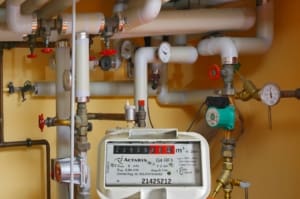
Understanding when and where energy is being used in a building is an important step in effectively reducing consumption, as it highlights areas of waste. Reducing energy consumption is also a sure-fire way to reduce utility bills. Sub-metering is a good tool to achieve this by identifying opportunities to reduce, shift and better control consumption. A main meter will capture all the energy, gas and water consumed by a building. Sub-meters are separately installed meters downstream of the main meters that measure the individual consumption of a location within the buildings or the energy use of separate assets (eg. lighting or cooling).
Building management system (BMS) refers to an automated computer-based control system that monitors and regulates a building’s electrical and mechanical equipment, including heating, ventilation, air-conditioning, electricity, and lighting. Buildings with BMS are often referred to as “smart buildings”. Automation improves the efficiency of a building’s operating system, often leading to a significant reduction in energy consumption (by as much as 60-80%) and thus cost. For example, BMSs include automatic external temperature correction to limit excess consumption. BMS relies on sensors being installed throughout the building.
Historic and Listed Buildings
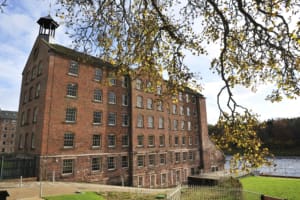
The retrofitting of historical buildings adds another layer of complexity. Historic Environment Scotland (HES) provides best practice advice for decision makers when applying government policy to a historic environment. HES conducts research and gives practical guidance on improving the energy efficiency of traditional (pre 1919) and historic buildings through retrofit measures whilst maintaining historic fabric and details, and creating healthy indoor environments.
See historic specific resources here:
- The HES Guide to Energy Retrofit of Traditional Buildings (2021) and Fabric Improvements for Energy Efficiency guidance (2013) for practical solutions to improving energy efficiency in traditional buildings, through a range of specific fabric improvement measures to different building elements.
- The BS EN 16883: 2017: Conservation of cultural heritage – Guidelines for improving the energy performance of historic buildings can be used to assess historical buildings.
- Historic England Energy Efficiency Research.
-
East Ayrshire Council
The St. Sophia’s Primary School aims to be the first school in the UK to achieve EnerPHit certification.
-
City of Edinburgh Council
A pilot ‘EnerPHit Informed Retrofit Plan’ aims to inform its approach to 400 non-residential buildings in its estate and offers potential lessons for other local authorities.
-
The Highlands Council
Opened a £7 million Recycling Fund with Salix to reduce carbon emissions and install a wide range of energy efficiency upgrades. The council has taken an estate-wide approach, with the first phase of works focusing on how education and leisure estates can be upgraded. Large-scale LED lighting and Solar PV projects have also been rolled out across the council’s school estate. Improvements to existing sites were made to prepare for the installation of renewable onsite generation.
-
The NHS
The NHS Climate Change and Sustainability Strategy has set targets to use renewable heating systems by 2038 for all NHS-owned buildings, and for all our estate to have net-zero emissions by 2040 or earlier where possible. They plan to reduce their energy consumption through efficiency measures (set out in Annex A of the strategy) and replace fossil fuel heating with renewable heat sources and electricity. As well as undertaking Building Management System (BMS) improvements, energy management and sub-metering. A flagship example is the NHS Orkney Balfour Hospital.
Energy Efficiency: Resources and Financial Support